One Red Supply Chain:
From Response to Preparedness
Anticipating needs, turning data into action, and investing before crises hit.
One Red Supply Chain:
From Response to Preparedness
Delivering under pressure
In a context of shrinking humanitarian resources, fragile logistics corridors, and increasing climate- and conflict-driven shocks, the IFRC supply chain must anticipate, adapt, and deliver under constraint.
As funding becomes more limited and needs continue to grow, the IFRC supply chain must do more with less, optimising how resources are used to maintain speed, quality, and humanitarian access.
Data-driven preparedness
Turning data into action
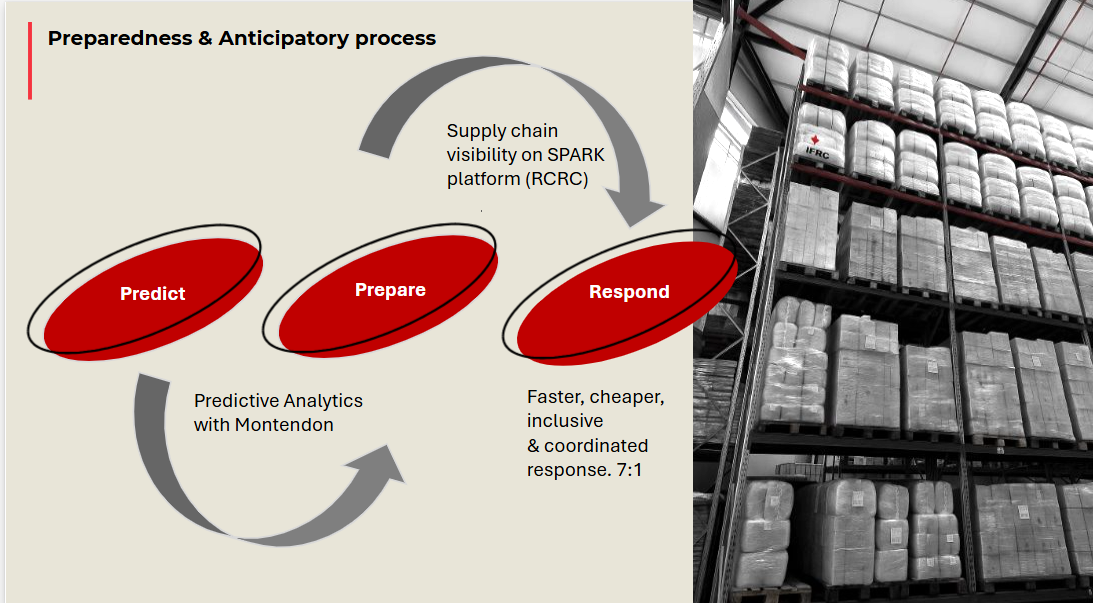
At the core of this shift is the IFRC’s ability to turn data into action. By combining Montandon, the world’s largest humanitarian crisis databank, with predictive analytics and SPARK — the IFRC’s supply chain control tower — the network can anticipate where, when, and how crises will unfold and what they mean for supply chains.
Through this transformation, preparedness shifts from where stock is stored to guaranteed access to supply capacity across the network — including supplier buffers, regional hubs, National Societies, and CVA. Scenario-driven decisions are taken before crises, replacing reactive response with early investment in preparedness.
SPAN, SPARK, and Montandon operate as a single system. SPAN defines the preparedness logic, Montandon informs risk, and SPARK provides real-time visibility. Together, they form a managed, network-wide system that embeds preparedness into governance, planning, and decision-making, enabling National Societies to lead and deliver principled humanitarian action at scale, strengthening localization.
Preparedness by default
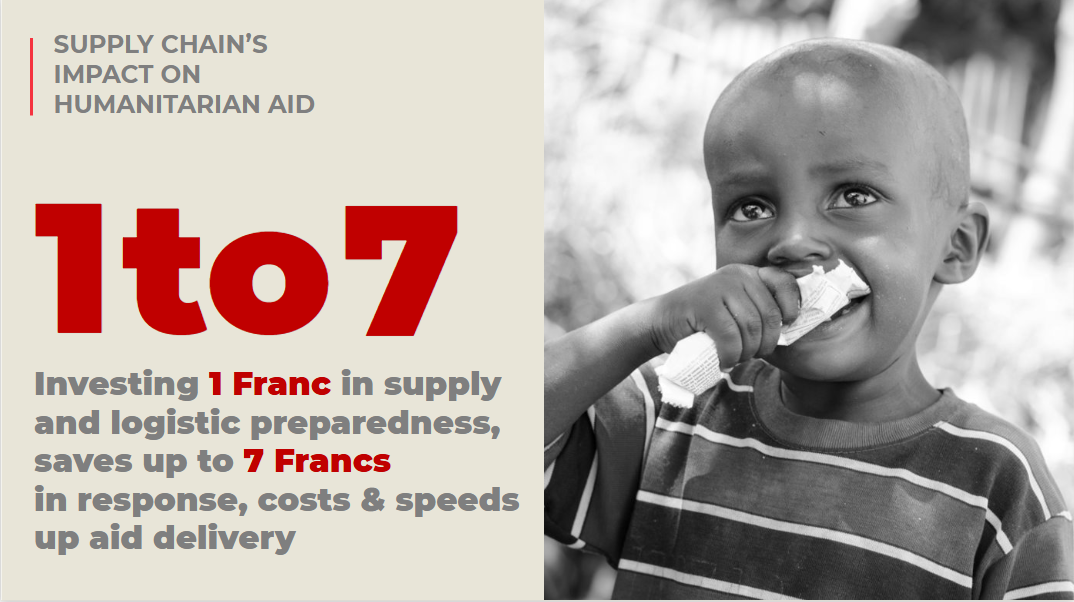
By shifting investment before crises, the IFRC can respond faster, at lower cost, and with greater impact — harnessing the power of the network through One Red Supply Chain.